
News
Newly Restored!
"The Happiness of Still Life: Scenes from the Austrian Biedermeier 1815-1848"
May 2026 - This Just In:
Newly restored 4K version of THE HAPPINESS OF STILL LIFE now available for screenings at museums, universities, and theaters.
About the Film:
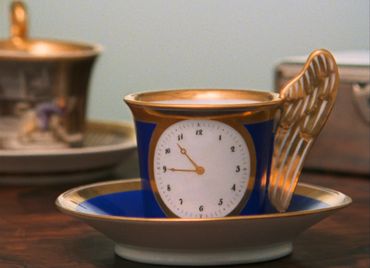
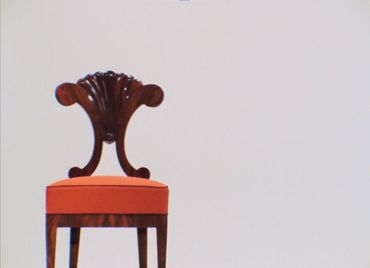
THE HAPPINESS OF STILL LIFE (27 min) is a haunting exploration of bourgeois domesticity in post-Napoleonic Vienna, and its inexorable path to romanticism and revolution. Beneath the exquisite refinement and simplicity of household objects—a chair, a teacup, a sewing basket—the film reveals the explosive impact of new industrial technologies and the resulting disruption of long-established social hierarchies. The Freudian underworld of Vienna 1900 is not far off. Music exclusively by Schubert (with one short interlude of Johann Strauss). Originally broadcast in 1989 on ORF (Austrian Public Television) and PBS. Shown worldwide, won prizes in Europe and the USA, now in the permanent collections of many museums.
Stills:
Reviews:
Der Wiener
Arbeiterzeitung
Arbeiterzeitung
"This brilliantly crafted film essay is infused with a love of detail, but without our own trademark Austrian habit of white-washing history. Thus the film not only explores the brutal reality of child labor in those days, but also concludes with the ominous opening lines of Marx’s Communist Manifesto." (12/1989)
Arbeiterzeitung
Arbeiterzeitung
Arbeiterzeitung
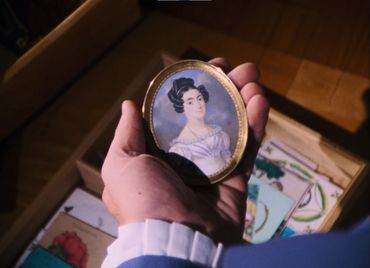
"In just 27 minutes and eight short scenes, [Andrea Simon’s film essay ] unmasks that peculiar era during which inwardness and domesticity were the arduously maintained disguise that hid a roiling abyss of pre-revolutionary turmoil: fierce political repression, overwhelming technological innovation, dangerously underestimated social upheavals. Shooting on location in Austria and drawing exclusively on original texts of the period, the American filmmaker skillfully evokes [delicately feels her way into] a time and place that, just a few years after the end of the Napoleonic Wars, became the first quintessentially bourgeois society of the modern age. Small everyday objects become virtuosic bit players: sewing baskets, diaries, exquisitely painted lockets and teacups -- and Biedermeier chairs whizzing across the screen in an impressive ballet." (12/21/1989)